
The Magnetised Elemental Fire Wand of the Golden Dawn
- Pat Zalewski

- Dec 10, 2025
- 2 min read
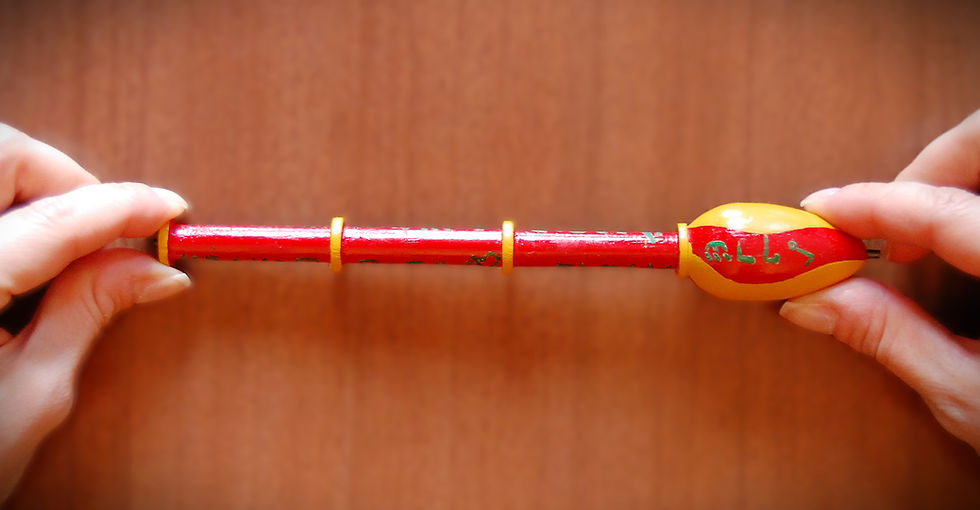
In the Golden Dawn’s fire wands, a magnetised steel rod was inserted within it. The size of the wand was little more than an old fashioned pencil in length and just over a CM in diameter. They were quite small, and at Whare ra temple in New Zealand they were given to the fledgling adepts (already built) to be painted. It appears that the founding fathers of the Golden Dawn did not want much of the wand visible after gripping it.
Its origins appear to be based in the 18th and 19th centuries, when mesmerism was built on the idea that a universal magnetic fluid flowed through all living beings. Franz Anton Mesmer believed that illness arose when this fluid became blocked or imbalanced, and that it could be restored through deliberate manipulation. Magnetized rods or wands were introduced as tools to make this invisible process tangible. They were thought to act like conductors, channeling the magnetic force from the operator into the patient’s body, much as a lightning rod channels electricity from the sky. The rods gave a physical form to what was otherwise an unseen energy, making the ritual more convincing and dramatic for those involved.
In practice, mesmerists would often place patients around a central vessel known as the baquet, which contained magnetized water and iron rods protruding outward. Participants would hold these rods or be touched by them while the mesmerist performed sweeping gestures, called “passes,” over their bodies. The combination of touch, suggestion, and the theatrical presence of the rods created powerful psychological effects. Patients frequently reported convulsions, emotional release, or sudden feelings of relief, which were interpreted as signs that the magnetic fluid had been rebalanced. While modern science recognizes these responses as psychosomatic or placebo-driven, at the time they reinforced the belief that magnetized rods were genuine instruments of healing.
Beyond healing, magnetized wands took on symbolic importance in ritual and occult contexts. They were seen not only as medical tools but as extensions of the operator’s will, amplifying their ability to direct invisible forces. In spiritualist circles, rods and wands were sometimes incorporated into séances or ceremonial practices, where they served as props that embodied the idea of channeling cosmic energy. The magnetization was thought to heighten their potency, aligning them with natural currents and making them more effective in both healing and magical work.
The legacy of these practices is significant. Although mesmerism itself was eventually discredited as a scientific theory, it laid the groundwork for hypnosis and influenced later esoteric traditions. The image of the wand as a conductor of unseen forces persisted in ceremonial magic, Theosophy, and eventually New Age practices. What began as an attempt to harness magnetism for healing evolved into a broader symbolic language, where rods and wands represented the human capacity to focus and direct subtle energies. Even today, echoes of this idea remain in modern energy healing and ritual work, showing how deeply the mesmerist use of magnetized rods shaped the imagination of both science and spirituality.


Comments